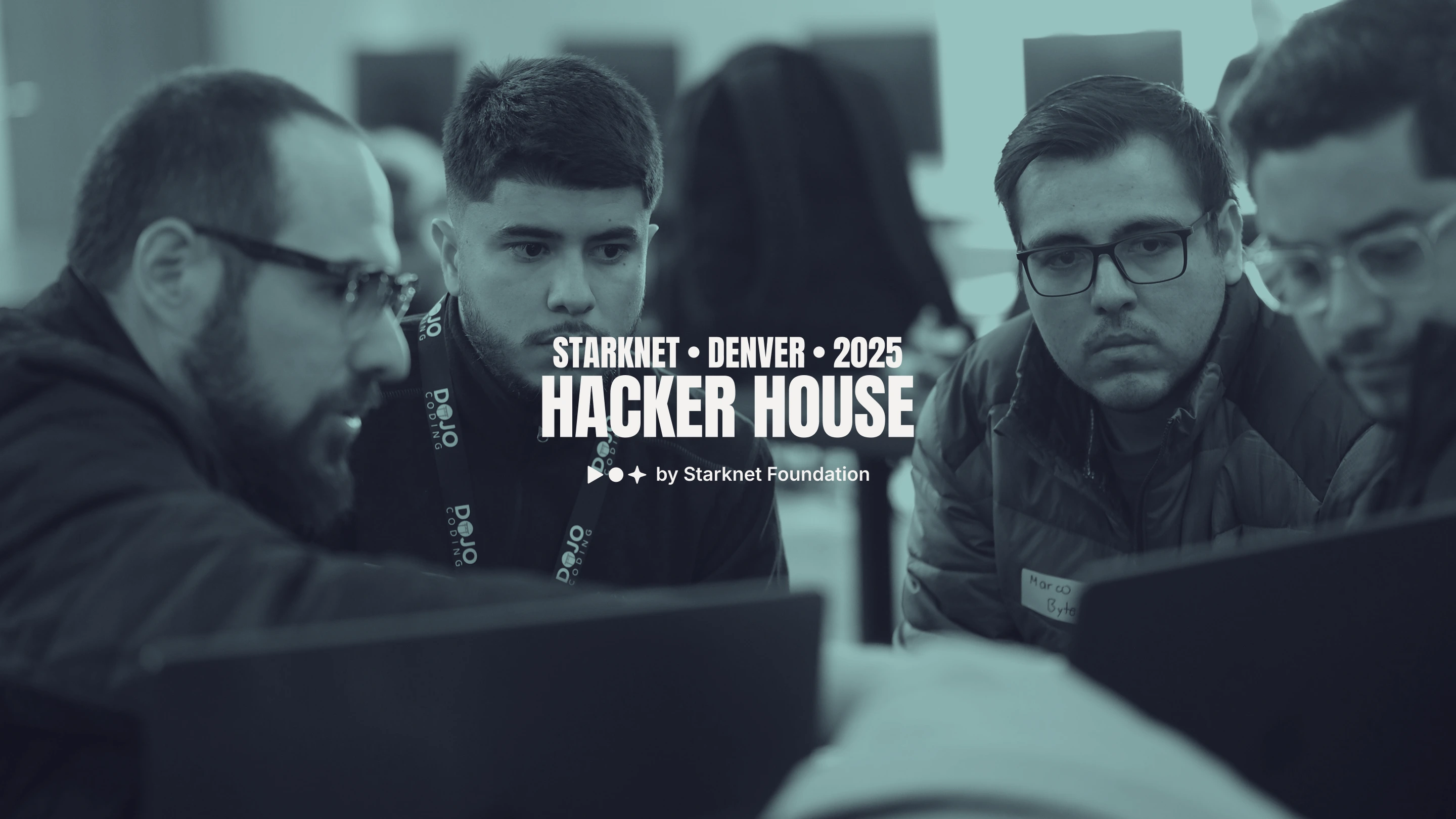
The Starknet Hacker House is a whirlwind of brainstorming, hacking, and collaboration. At the finish line is Demo Day — the perfect showcase to demonstrate to the world (and the judges) what you’ve built on Starknet and why it matters.
Let’s explore how Hacker House Demo Day works, what happens with each team after the event, and the best practices for delivering a killer demo.
Time to jump in!
Hacker House Demo Day: How it works
Demo Day is the final day of the Starknet Hacker House, during which teams come together and showcase the fruits of their labor.
Out of the many teams that showcase their projects, the top 5 teams will be selected to present their demos before a panel of judges and the VC community.
Hacker House team demos
Each participating team, regardless of where they ultimately place on Demo Day, has the chance to:
- Keep Building – Continue developing your product and refining your pitch.
- Stay in Touch with Mentors – You will stay in the shared Telegram group, keeping the door open for ongoing Starknet Foundation support and technical feedback.
- Apply for Grants – All Hacker House teams can apply for Seed or Growth Grants, when ready to do so.
- Leverage Your Network – Demo Day is just the first step. Remember: you’ve built a network of mentors, fellow builders, founders, and VCs who can help you achieve long-term success.
Top teams present to judges and fellow hackers
If you’re among the top 5 teams, you’ll pitch your project on the Hacker House stage. Presentations are typically short and focused, allowing the judges to gauge your project’s potential, technical depth, and overall impact.
You’ll be judged on the following criteria:
- Innovation – How novel is your solution?
- Execution – Is your project well-built and functional?
- Impact – Does it solve a real problem or significantly improve an existing process?
- Clarity – Are you effectively communicating your idea and its relevance?
What happens next for the Top 5 teams?
Being in the top 5 is an excellent opportunity to gain visibility. The Starknet Foundation and its ecosystem partners will be watching closely, which can lead to:
- Potential Grants – Some teams may be ready to immediately apply for a Seed Grant from the Starknet Foundation, or even a Growth Grant, depending on their stage of development.
- Ongoing Support – Stay in contact with the Foundation through channels like a dedicated Telegram group. Foundation and community mentors will provide technical support, feedback, and help you refine your product-market fit.
- Networking Benefits – You’ll keep access to a network of mentors, builders, founders, and potential investors you’ve met. These connections can be invaluable as you continue to grow your project.
How to prepare your project’s demo
Here is a step-by-step guide for creating the best possible project demo.
1. Get product feedback early and often
The best Hacker House projects get lots of feedback and then apply it. Every piece of feedback is valuable, so we encourage you to get input from mentors, other founders, and fellow hackers. Ask them to test your UX, challenge any assumptions, and probe your technical implementation.
2. Craft a clear, concise product story
Your demo should be brief yet compelling. Highlight:
- What you’re building – Your product’s core features.
- Why it matters– The problem or gap your product addresses, and why it’s important.
- How it works – Crucially, use most of your time to create a quick live demo or walkthrough that showcases your solution.
3. Draft a rough demo
Before the final day, create a draft of your presentation:
- Slides – Keep them visually appealing but uncluttered.
- Speaker notes – What key points do you want to hit for each slide?
- Timing – Practice sticking to the time limit to avoid rushing or over-explaining.
4. Get presentation feedback
Show your preliminary presentation to Omar Espejel (or whichever mentor is designated to review presentations). He will give you direct feedback on your presentation style, clarity, and slides. This is invaluable guidance to ensure you put your best foot forward.
5. Rehearse, then rehearse again
The best way to feel confident on Demo Day is to practice. Once you’ve refined your slides based on feedback, rehearse multiple times — ideally in front of a small audience that can simulate the real experience. This will help you iron out any kinks in delivery and pacing. And, if you can, practice speaking into a mic, so you know that you will be heard clearly.
Some final thoughts on Demo Day
It’s helpful to think of Starknet’s Hacker House Demo Day not only as a competition but also a platform to elevate your project, connect with potential supporters, and set the stage for future success.
Whatever the results may be, remember: your journey doesn’t end with Demo Day. You can continue to develop your product, tap into the Starknet Foundation’s support and grants, and leverage the incredible network you’ve built during the Hacker House.
In the end, the ultimate goal is to help you achieve product-market fit and profitability. Keep building, stay curious, and never hesitate to reach out to the community for feedback and guidance.
Good luck, and see you on Demo Day!